
Statesville, NC · Garage Door Service
When an Older Door in Statesville Is Still Worth Fixing
Statesville homes built 1959-2003 carry original torsion hardware that's aging out. Here's how to tell if a repair still makes sense or if it's time to replace.
- Repairs & new doors
- Springs & openers
- Serving 6 nearby communities
When Waiting Is Fine
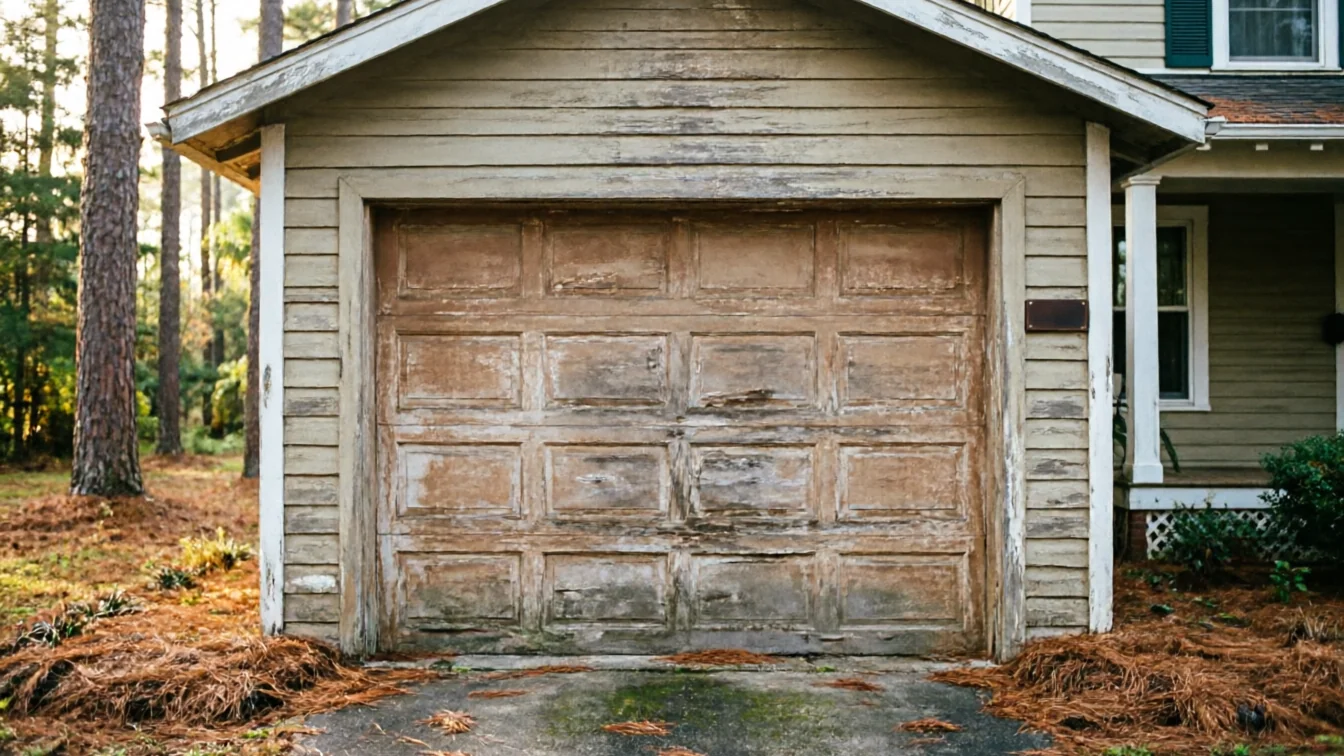
Not every noise or sag means you need a new door today. A lot of the houses we get called to around here went up between 1959 and 2003, with the bulk of that stock dating to the 1980s and 90s across the twelve areas we cover. A door from that era isn't automatically junk. If the track is straight, the panels aren't rusted through at the bottom, and the opener still lifts without straining, a worn roller or a stretched cable is a fix, not a replacement job. Waiting a season to budget for it won't hurt anything mechanical.
What changes the math is how the door's been treated. A door that's had its springs serviced once or twice over three or four decades is a different animal from one that's never been touched since it went in with the house. If you don't know which one you have, that's worth finding out before you decide anything. We'll tell you straight if it's fine to ride out another winter - we'd rather say that than sell a job that isn't needed yet.
What the Weather Here Does to It
This area sits in a cold-moderate climate band, not the deep freeze further north, but enough swing between summer heat and winter cold to work steel and lubricant hard over a 20 to 40 year span. Torsion springs lose tension faster when they go through repeated temperature swings without being reset, and that's exactly the cycle a door built in, say, 1985 has been through for close to four decades now. Galvanized tracks from that era also tend to pit where condensation collects at the bottom brackets, especially on doors that haven't been realigned in years.
None of this means the door fails on a schedule. It means the symptoms show up as a hard lift on cold mornings, a spring that looks fine but isn't holding tension the way it used to, or a track that's slightly out of plumb from decades of minor settling. If your door's fighting you more in January than July, that's the climate talking, not a design flaw in the door itself. It's also the clearest early signal that it's worth a look before the spring actually lets go.
The Situation
The service area has 15,394 households, and 9,736 of those are owner-occupied houses - meaning most of the stock we're talking about isn't a rental someone's going to let ride into failure. People who own their house in this area tend to want the door working right, not just working. Given that housing median lands around 1982, a large share of these doors are original or close to it, meaning the hardware predates a lot of the safety and durability changes that came later - things like better bottom brackets and improved cable retention.
That's the real situation homeowners here are in: a door that's old enough to have outlived its original springs and rollers by a wide margin, but not so old it was built before galvanized track was standard. It's a middle-aged door problem, not an antique problem, and that's good news. Parts for a door from this era are usually still available, which is more than we can say for the handful of older one-piece doors still out there.
What It Costs
We're not going to throw a number out here that doesn't hold up once we're standing in your driveway - door width, spring size, and what's actually failed all move the price, and guessing at it in writing does you no favors. What we can tell you is how the decision usually breaks down. At a median household income of $65,454 for the area, most of the owners we talk to want a straight repair estimate first and a replacement number as a backup, not the other way around.
A repair almost always costs less than a full replacement, but if the door's steel is rusted through, the track is bent beyond realignment, or you're replacing the third spring in five years on the same worn-out hardware, you're paying repair prices to delay a replacement bill that's coming anyway. That's the one honest limit to repair work: it buys time, it doesn't reset the clock. We'll give you both numbers and let you decide which one makes sense for a door that's done 30 or 40 years of work already.
Frequently asked questions
My garage door is from the 1980s. Is it too old to repair?
Not on its own. A lot of the doors we service in this area date to the 1980s and 90s, and most repairs - springs, rollers, cables - are still straightforward on that era of door. Age matters less than condition: rust through the panel steel or a track bent from years of misalignment are the things that push a job toward replacement instead.
Why does my door get harder to open in winter?
This area sits in a cold-moderate climate band, and the swing between summer and winter temperatures works steel and spring tension harder over the years. A spring that's fine in July can feel noticeably stiffer or weaker in January. If that gap is getting bigger each winter, it's worth having the tension checked before it fails outright.
How do I know if I should repair or replace?
We look at the track alignment, the panel condition, and how many times the springs have already been serviced. A door that's had one or two spring jobs over 30-plus years is usually still a repair. One that's rusted at the base or on its second or third spring in a few years is closer to a replacement decision - we'll tell you which category yours is in before quoting anything.
Related garage door services in Statesville
More garage door guides
Book garage door service in Statesville
Call now or request a quote - tell us what the door is doing and where you are.